
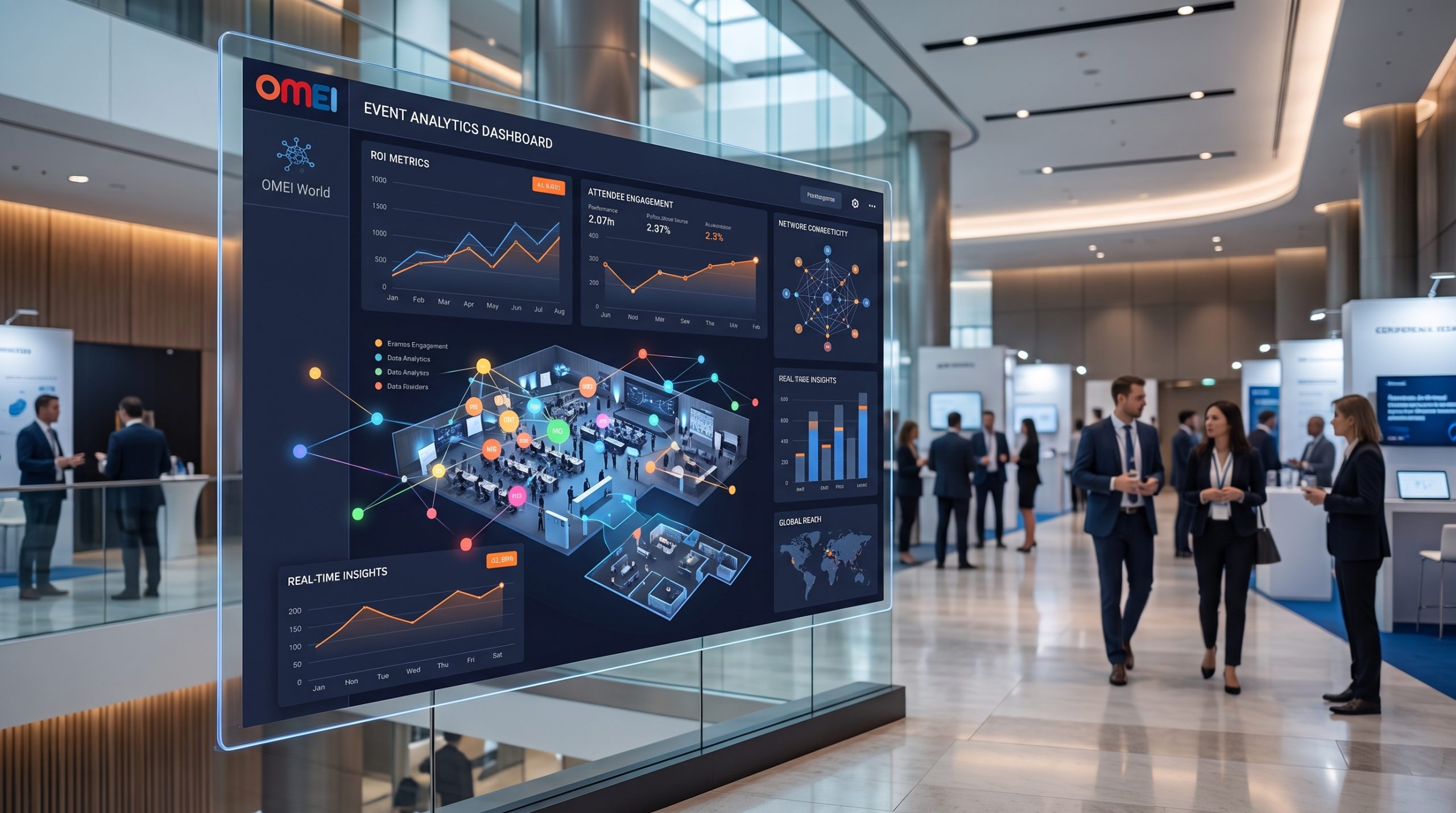
The Rise of Economic Impact and ROI: The New Era of Analytics in Corporate Conferences
The era in which the success of a corporate conference was measured solely by the number of badges issued at the entrance has officially come to an end. In today’s meetings and events (MICE) industry landscape, finance departments and executive committees demand rigorous justification of return on investment. Advanced analytics, the ability to track attendee behavior, and the measurement of direct and indirect economic impact have become the undisputed standard for evaluating the true profitability of each event.
From Vanity Metrics to Data with Real Value
For years, the total number of registered participants was the primary performance indicator used by organizers. However, by 2026, organizations will demand an understanding of what actually happened during the event. Tools based on artificial intelligence, predictive analytics, and interactive heat maps enable the measurement of real-time attendance at sessions, the level of interaction with speakers, and the exchange of business contacts. The true value lies in converting every touchpoint within the venue into qualitative, actionable data for decision-making.
Direct Business Attribution and Impact on the Destination
Measuring corporate ROI is not limited to digital interactions; it encompasses the generation of medium- and long-term business opportunities. Current metrics integrate CRM systems with event applications to assess how many business meetings led to contracts closed months after the event concluded. Likewise, international conferences are incorporating mathematical models of local economic impact, accurately measuring the contribution to lodging, dining, transportation, and the development of host economies.
The Meeting Planner as a Strategic Analyst
This paradigm shift radically transforms the role of the event planner. The modern MICE professional is no longer merely a logistics and operations manager but a business strategist capable of interpreting complex metrics. Asking questions about audience retention, the cost per qualified lead, and the carbon footprint versus the value generated are now essential skills for ensuring the continuity of event budgets in large companies.
Conclusion
Accurate measurement of economic impact and ROI has redefined the rules of the game in the meetings industry. Those who adopt advanced analytical tools will not only ensure the profitability of their events but also secure the industry’s strategic relevance in global corporate decision-making.
Do you want to take your events to the next level of profitability?
Boost your brand's strategy in the MICE industry. Explore our sponsorship opportunities and specialized outreach by visiting the
